Leiomy Maldonado: Wonder Woman of Ballroom
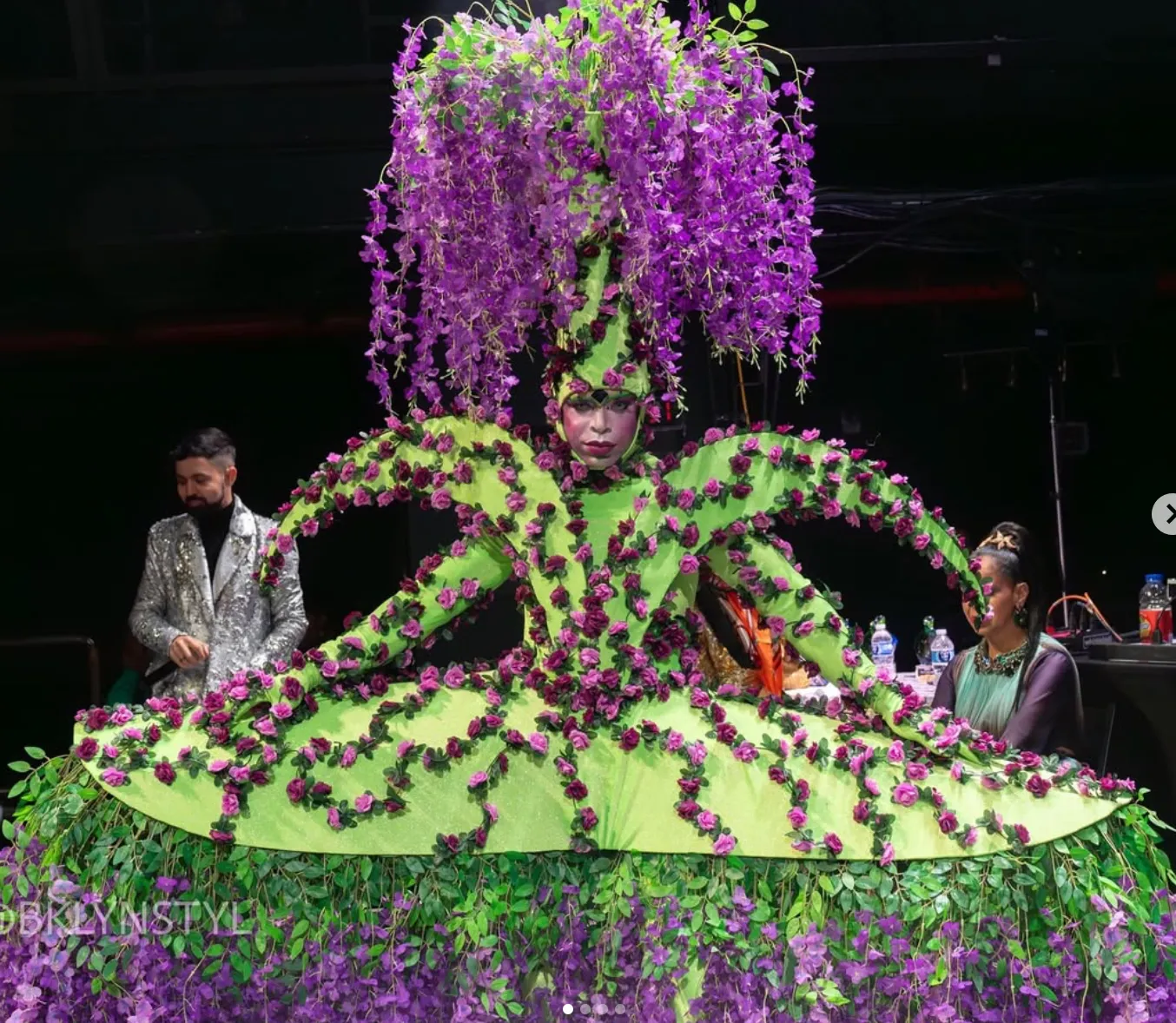
From queer motherhood and the ballroom scene to television, fashion, and Broadway, Leiomy Maldonado has spent her career transforming the possibilities of movement, visibility, and trans artistry. In this conversation, she reflects on the people and experiences that shaped her, the importance of creating your own language, and what it means to build a legacy while bringing the next generation with you.
FINDING BALLROOM, FINDING FAMILY
1. Your entry into ballroom began when your first queer mother and mentor, Kelly, introduced you to the scene through a tape documenting 1990s ballroom. What did it feel like to see Black and Brown queer and trans people celebrating themselves through dance, fashion, and performance? Was there someone on that tape who immediately captured your imagination?
2. What did being taken in by Kelly mean to you at that point in your life? Looking back, what did she teach you about queer chosen family, survival, and becoming the person you wanted to be?
3. You eventually became a mother and mentor yourself, taking on the responsibility of nurturing younger generations in ballroom and dance. What lessons from Kelly have stayed with you, and what have your own children and students taught you in return?
CREATING WONDER WOMAN
4. You developed a movement vocabulary that became unmistakably your own—from your signature hair flip to your dramatic spins, dips, and theatrical approach to voguing. Where did that creativity come from, and what gave you the confidence to develop a style that didn’t always conform to the expectations of your local ballroom community?
5. You’ve influenced dancers and mainstream pop culture alike, sometimes without receiving the recognition or credit that originators deserve. What does it mean to you to create something that becomes influential beyond ballroom? And how do you feel about the ways ballroom vocabulary and Black trans creativity have been adopted by mainstream culture?
WHO GETS TO BE SEEN?
6. Ballroom has given the world an enormous amount of art, language, fashion, music, and movement, yet the Black and Brown trans people who created and sustained the culture are still frequently left out of the story. What do you think is lost when mainstream culture celebrates the aesthetics of ballroom without acknowledging its history and its people?
7. Your career has also included highly public experiences with racism, misogyny, and transphobia, including your time on America’s Best Dance Crew. How did those experiences shape your relationship with visibility, self-worth, and your understanding of what it means to advocate for yourself as a trans woman?
8. For young trans and gender-nonconforming people who are encountering rejection—from family, institutions, or even within queer spaces—what would you want them to know about their inherent worth and their right to take up space?
TEACHING, LEGACY & COMMUNITY
9. You’ve become an accomplished dancer, choreographer, performer, judge, and teacher. What makes someone a great teacher, particularly when you’re teaching a form as culturally rich and personal as ballroom? Has a student or younger performer ever changed the way you think about your own art?
10. You’ve achieved visibility across television, fashion, music, and ballroom—from Pose and Legendary to Savage X Fenty and Nike. What keeps you connected to the New York ballroom community, and how do you remain grounded when your work increasingly exists in the mainstream spotlight?
THE JELLICLE BALL & A NEW STAGE
11. Your Broadway debut as Macavity in The Jellicle Ball represents another historic chapter in your career and brings ballroom’s history and artistry to a major theatrical stage. How has working in theater differed from television, film, or ballroom? What has this experience taught you about yourself as a performer?
12. The Jellicle Ball brought together an extraordinary community of Black trans and queer artists, many with roots in ballroom and shared experiences of creating space in industries that were not originally built for them. What did it mean to build that world together, and are there particular moments or relationships from the production that you’ll carry with you?
BUILDING WHAT COMES NEXT
13. Legendary demonstrated the appetite for ballroom-centered, TGNC-led storytelling, yet the series was ultimately canceled and removed from streaming. What does the industry need to understand about investing in trans-led stories beyond simply giving them a moment of visibility?
14. You’ve spent your career being a first, but you’ve also become much more than a series of “firsts.” When you think about your legacy now, what do you hope people remember—not only about Leiomy Maldonado the performer, but about Leiomy the mother, teacher, artist, and community member?
15. Your name, “Wonder Woman,” is connected to the mythology of the Amazons—women who exist outside traditional structures of power and define themselves on their own terms. What does Wonder Woman mean to you today, and how has that mythology shaped the woman and artist you’ve become?
16. Finally, we’re living through a moment when many trans and gender-nonconforming people are being asked to shrink themselves, question their futures, or simply survive. What would you say to the person who has a huge dream but doesn’t yet have the support system, resources, or community to believe that dream is possible?