
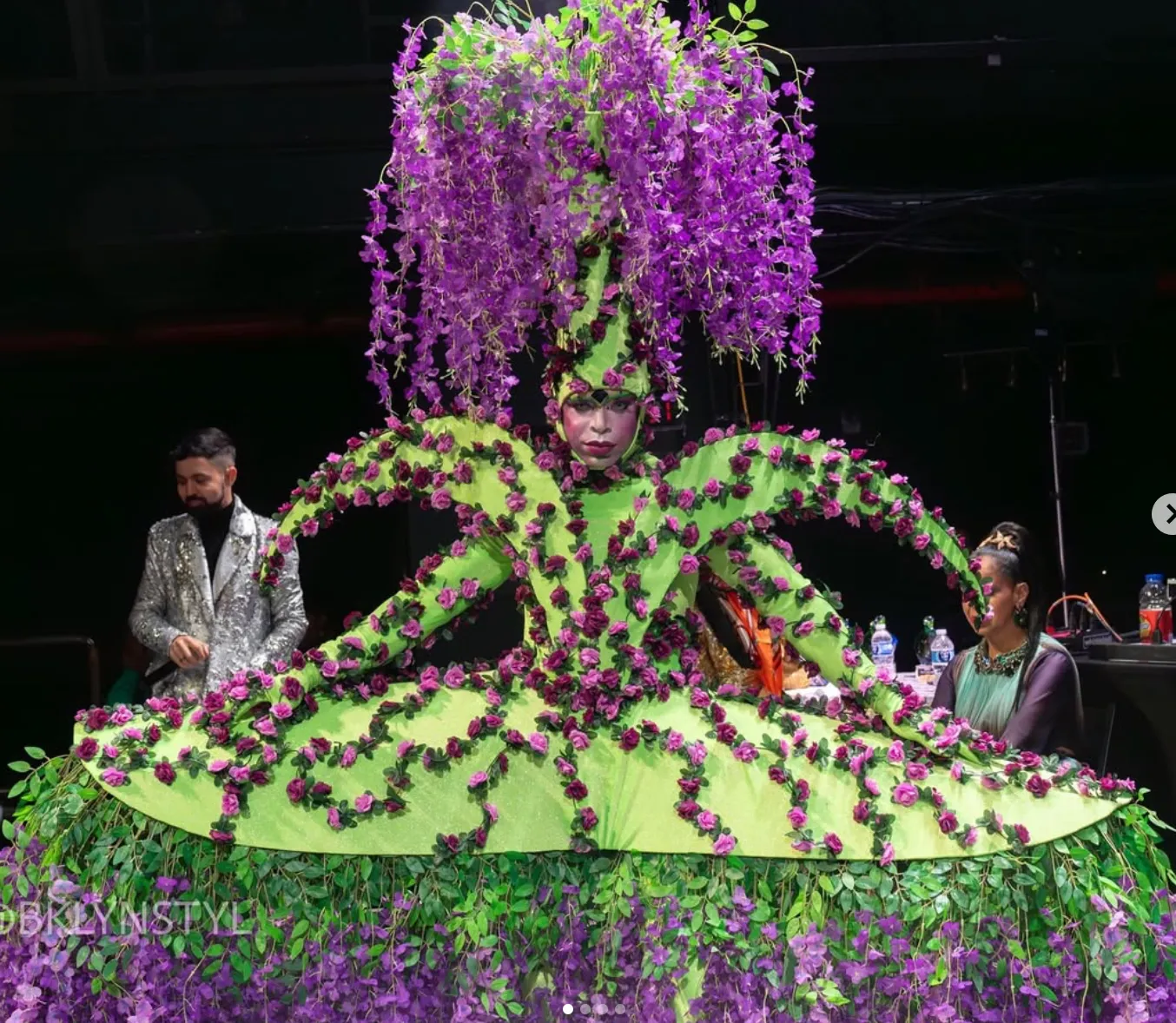
Afrofuture Garçon: Defining a Bazaar World on the Ballroom Stage
AFROFUTURE GARÇON: “DEFINING THE A BAZAAR WORLD ON THE BALLROOM STAGE IN-DEPTH INTERVIEW WITH AFROFUTURE
TRAN MAGAZINE: For people who may be discovering you for the first time, how would you introduce yourself and describe what Afrofuture Garçon means to you?
TRAN MAGAZINE: How did you first find your way into ballroom, and what was it about the culture that made you feel like, “Okay, this is my space”?
TRAN MAGAZINE: You’re really proud of the pieces you put together. When you’re creating a look, what usually comes first—the garment, the idea, the reference, or just a feeling you want the look to give?
TRAN MAGAZINE: Bazaar feels like such a natural category for you because it gives you room to play outside of traditional gender rules. Does competing in Bazaar give you a different kind of freedom to experiment with masculinity, femininity, and everything in between?
TRAN MAGAZINE: Bazaar is also about loudness—big ideas, unexpected combinations, and looks that demand attention. What makes a look feel loud to you, and how do you know when you’ve pushed it far enough?
TRAN MAGAZINE: Ballroom has so many traditions around gender and presentation, but Bazaar can feel like a place where creativity gets to lead. How has that freedom shaped the way you understand your own nonbinary expression?
TRAN MAGAZINE: You’ve also helped create new spaces for nonbinary performers within ballroom. What do you think ballroom is doing well when it comes to inclusion, and where do you think there’s still room for the culture to grow?
TRAN MAGAZINE: What are some of the hurdles you’ve experienced as a nonbinary person navigating ballroom, and what would you love to see change so that more people can feel like they truly belong?
TRAN MAGAZINE: Some of your pieces have existed beyond the ballroom floor and have been displayed in art exhibitions. What does it feel like to see something you created move from a ballroom environment into a gallery or exhibition space?
TRAN MAGAZINE: When people see the finished piece, they might not realize how much goes into it. How many hours—or sometimes how much money—can go into creating one of your looks, and what keeps you passionate enough to keep doing it?
TRAN MAGAZINE: Do you think about your pieces as fashion, sculpture, performance, art—or do you prefer not to put them in one category?
TRAN MAGAZINE: What has ballroom taught you about taking up space and letting your creativity be seen, especially when the things you’re making don’t necessarily fit into an existing box?