Nightlife Icon: Amanda Lepore
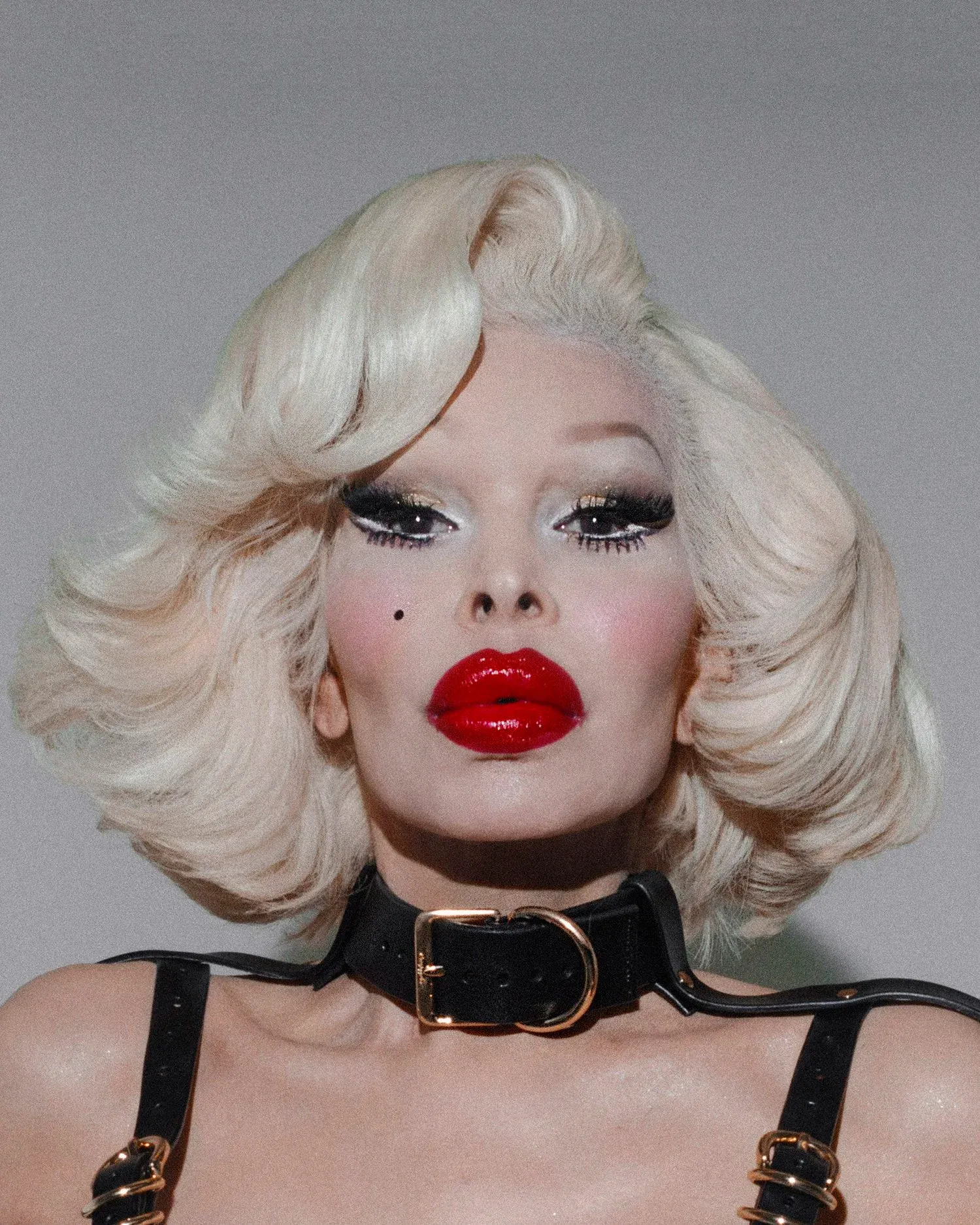
Amanda Lepore has spent decades turning nightlife into an art form. Model, performer, singer, actress, fashion icon, and enduring New York nightlife fixture, she has become a figure whose influence stretches across generations of queer culture.
TRAN MAG: If your life became a dessert, what would it look like?
AMANDA LEPORE: A strawberry crêpe.
TRAN MAG: What is one unspoken rule of nightlife etiquette that everyone should still follow?
AMANDA LEPORE: Smelling good.
TRAN MAG: Is there a designer who understood Amanda Lepore immediately, without you having to explain yourself?
AMANDA LEPORE: Balenciaga. I thought they were going to do something completely out of my comfort zone. When you walk the Balenciaga shows, the past seasons really knew what I liked and understood me.
TRAN MAG: When you were young, what was most important to you in understanding your identity and knowing that this was who you were? And how did accessing hormones contribute to your happiness and self-love?
AMANDA LEPORE: I don’t recommend it, but I got hormones illegally. I wasn’t seeing a doctor, and I was still in high school.
The guidance counselor said I couldn’t go to school like that, but I was already grasping everything and going through it. They asked if I wanted to leave or if I wanted to get a high school diploma. I wanted a high school diploma, so they gave me a way to do that, and that really helped me.
My father wanted me to be a hairdresser and dress up and go out on the weekends because he was worried about me. But, of course, I didn’t stop. Probably two years later, I had changed so much.
Q: You’ve spoken about the people who propelled your trajectory. One person you’ve mentioned is Bambi. Can you tell us about the people who helped push you toward the life you eventually created?
AMANDA LEPORE: I have two stories.
The first was when I was working at Patricia Field. A friend of mine found a book about Brigitte Bardot in the garbage. I read it and loved the way she looked. She looked like Brigitte Bardot and Marilyn Monroe. It was probably the 1950s or ’60s.
She was a showgirl, and it looked like she had posed nude because I could see the shape and everything. I thought she was just great. Then I read more about her, and she was having sex with Hollywood stars, appearing in scandal magazines, and living this incredible life. I really liked her life and related it to mine. I thought my life was kind of like hers.
She was also the first person at a transvestite club to get a sex-change operation. Then all the other girls started doing it, and it became a really famous transsexual club.
That’s kind of how I met my drag mother. I walked into a gay bar, and she was a trans drag queen and entertainer. It just so happened that the bar was where all the other trans drag queens congregated. And, yeah, the rest is history.
TRAN MAG: You’ve also shared a beautiful story about your mother and your childhood. Can you tell us about that?
AMANDA LEPORE: My mother was schizophrenic, so she was hospitalized. My father got a nanny for me, and he told her that I liked dolls. She had a bar with dolls, and she sewed. She made me this pink satin gown, like a little princess gown, and it was so pretty. I was so excited.
I think my father was afraid that I wasn’t going to end up with a man. He would take away my dolls and things from time to time. I think he was afraid and wanted to make sure I was okay.
But my nanny accepted me enough to know what I liked, even if she didn’t believe in it herself. I thought that was cool.
My mother was also very accepting of me. When she would see me sad, she would tell me stories. She’d say, “Oh, I saw a drag show, and they were so beautiful.”
I’d ask, “What did they look like?”
And she’d say, “They had beautiful clothes—more beautiful than women.”
That meant so much to me. Looking back, it’s very sweet. At the time, it really gave me hope that there was something out there. I think I was only about 10 or 11 when she told me those stories.
TRAN MAG: Kevin Aviance once said that choosing one thing that defines him would downplay everything else he does because all of it is equally part of his soul. When people who are new to New York nightlife ask you, “Who is Amanda Lepore?” or “What does she do?” “What do you say?”
AMANDA LEPORE: I always just did anything people asked me to do. Luckily, it was good stuff because I would do anything. You know, you just do anything to survive.
TRAN MAG: You’ve become a model, actress, singer, performer, and nightlife icon. What does it mean to have built such a multifaceted career, particularly as a trans woman?
AMANDA LEPORE: I just always did anything people asked me to do. I didn’t really think about it as a career at first. I was just doing things and surviving.
TRAN MAG: You’ve been part of New York nightlife across multiple generations. When you look at the decades of nightlife—from the underground queer scene of the past to the new generation—what spirit or energy has remained the same? Can you still walk into a room and recognize that familiar energy?
AMANDA LEPORE: I just feel at home in it. I’ve done it all my life, and I don’t really see a difference with the kids. They’re just wearing different clothes.
I think I’ve always had jobs with alternative people. There was only one period, in the ’90s, when we weren’t part of the LGBTQ community in the same way, so we couldn’t really go everywhere. I got a lot of jobs in straight bars. I would go-go dance, and I did lap dancing too. I even worked as a dominatrix.
I was comfortable, and the guys were comfortable with me.
TRAN MAG: A lot of young queer people today look at you with this sense of awe. They might say, “Amanda Lepore is everything,” but feel too intimidated to approach you. What do you say to them?
AMANDA LEPORE: I always tell them, “I had the same feeling.”
But when I have conversations with people, I’m sometimes just the most normal person in the bar.
The other night, I got up to dance and people started talking to me. They were saying, “We were all afraid to go up to you.”
And I told them, “I didn’t feel that way.”
At the end of the day, she’s a doll here at the function, just partying like everyone else.
TRAN MAG: You’re known as a mother to so many people in the community. I’ve spoken with some of your “biological children” and there’s clearly something about you that makes young people see you as a maternal figure. Why do you think that is?
AMANDA LEPORE: Well, I think they probably see that I’m all surgically done, I’m happy, and I’m successful. And if you really dig deep, you could see that I went through a lot just to exist.
I think they kind of want to be like me.
Sometimes I’ll go away, and there are people who transition while I’m gone. Then they’ll come back and say, “Do you see them before and after?”
I don’t really remember, but I take their word for it when they tell me they look different.
And it feels really good. It’s actually really rewarding to me because it makes me feel like I did something right.
TRAN MAG: You’ve said that one of your favorite things to do is stone clothing. If you could guess, how many hours have you spent stoning things throughout your entire life?
AMANDA LEPORE: I don’t want to think about it!
It’s like a piece of activity for me. It relaxes me. I like pretty things, and I can’t always afford them, so it’s kind of an economical way of doing it.
I feel like I’m saving money by doing it myself, but I don’t think I am. I think you just spend more money making stuff.
As a drag queen, I stone everything—including my shoes.
TRAN MAG: What are three must-haves before leaving the house?
AMANDA LEPORE: A wig, a push-up bra, and sunglasses for the outdoors.
TRAN MAG: When one of your favorite dresses eventually enters an archive decades from now, what story do you hope people imagine about the person who wore it?
AMANDA LEPORE: I would hope they appreciate it because I did it myself at home.
TRAN MAG: If you could choose one of your favorite dresses to enter an archival collection, which would it be?
AMANDA LEPORE: Whatever I’m working on presently is always my favorite. I don’t know why, but I always say, “Oh, this is my favorite. This is my favorite.”
TRAN MAG: You often seem to choose an outfit based on your mood and whatever energy you’re channeling that evening. Is there a particular color palette that inspires you?
AMANDA LEPORE: It depends. Sometimes I think, “This is giving me a certain feeling,” and then I have to take something and make it work with that energy.
TRAN MAG: If all these dolls are troublemakers, imagine you open a school for glamorous troublemakers. What would you teach on the first day?
AMANDA LEPORE: Disappointment.
Q: And then?
AMANDA LEPORE: Just bust out the whip!
Amanda Lepore’s legacy is not confined to a single nightclub, a single era, or a single image. Her story is one of survival through transformation—of taking whatever spaces were available and making them glamorous, making them hers, and ultimately making room for the generations that followed.
For the dolls who see themselves in her, perhaps that is the greatest lesson: you don’t have to wait for permission to become who you already know yourself to be.